
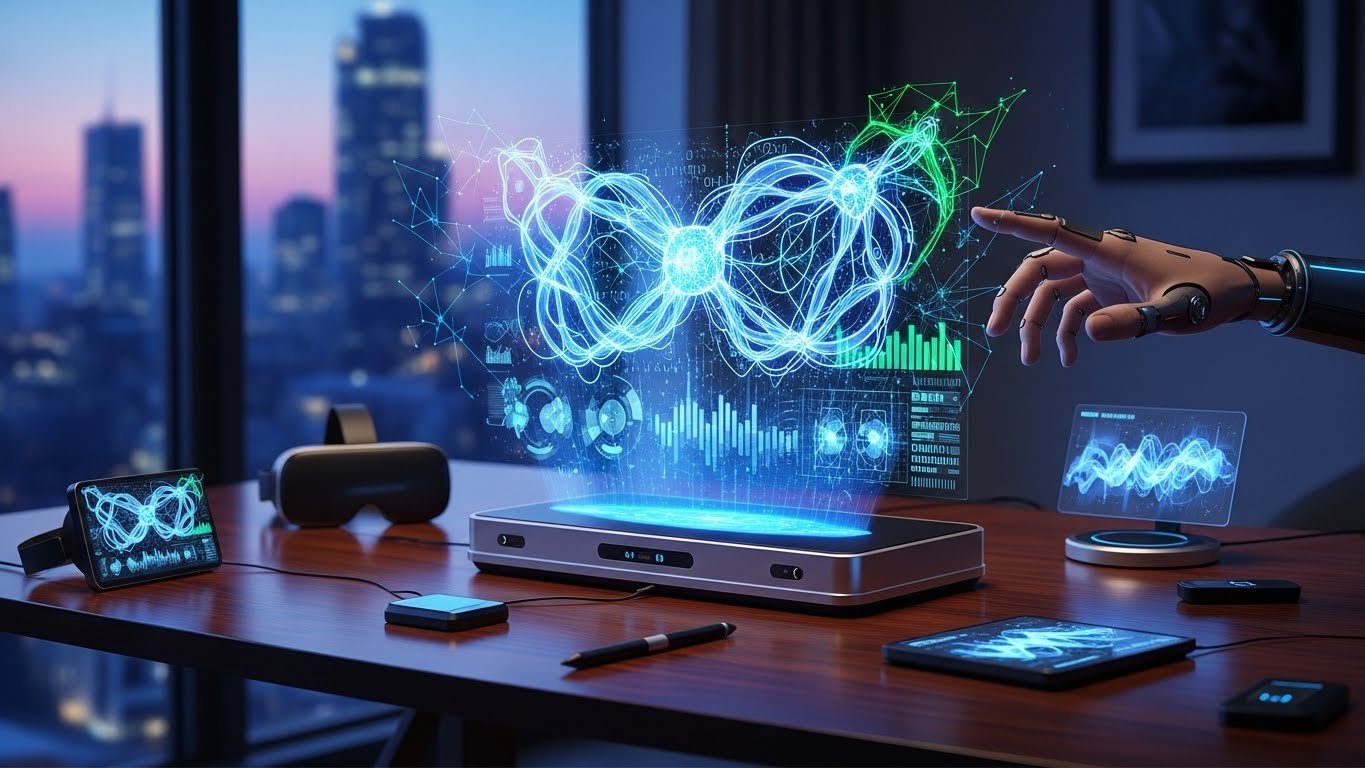
The world of technology is evolving at an unprecedented rate, transforming every aspect of our daily lives. From artificial intelligence (AI) to quantum computing, the rise of 5G, and the ever-expanding Internet of Things (IoT), we are witnessing a tech revolution that promises to reshape how we live, work, and interact with the world around us. In this blog post, we’ll explore some of the most exciting and transformative technological trends that are pushing the boundaries of what’s possible, and offer a glimpse into the future of innovation in a connected world.
The Rise of Artificial Intelligence: From Science Fiction to Everyday Reality
For decades, artificial intelligence was a concept relegated to the realm of science fiction. Movies and books painted vivid pictures of robots with human-like intelligence and self-aware machines. Today, AI is no longer just a futuristic idea—it’s embedded in our lives in ways we don’t always notice. From virtual assistants like Siri and Alexa to recommendation engines on platforms such as Netflix and Amazon, AI is already influencing many of the decisions we make every day.
One of the most significant breakthroughs in AI is machine learning, which allows algorithms to learn from data and improve their performance over time. In industries such as healthcare, AI is now being used to analyze medical images, diagnose diseases, and even develop personalized treatment plans. In finance, AI-driven algorithms help predict stock market trends and automate trading processes.
However, AI’s potential extends far beyond just these practical applications. The rise of generative AI, which can create new content such as text, images, music, and even code, is opening up new creative possibilities. With tools like OpenAI’s GPT-3, AI is helping writers, designers, and content creators produce new works in record time, while also assisting in tasks like drafting emails, composing music, and generating code for software development.
Despite the exciting opportunities that AI presents, it also raises significant challenges. Issues such as data privacy, ethical implications, and job displacement due to automation are concerns that need to be addressed as we continue to integrate AI into more aspects of society.
5G Connectivity: The Backbone of a Smarter World
As the world becomes more connected, the demand for faster, more reliable internet speeds has never been higher. Enter 5G, the fifth generation of mobile network technology, which promises to revolutionize everything from communication to entertainment, transportation, and healthcare.
5G is not just about faster internet speeds; it’s about enabling new kinds of experiences. With speeds up to 100 times faster than 4G, 5G opens the door to innovations like real-time virtual and augmented reality (VR/AR), autonomous vehicles, and ultra-low-latency applications that require instant data processing, such as remote surgeries and industrial automation.
One of the key features of 5G is its ability to support a massive number of connected devices simultaneously. This is crucial as we move toward a more connected world where IoT devices—ranging from smart home gadgets to wearables and industrial sensors—are becoming commonplace. 5G will enable seamless communication between these devices, creating a truly smart, interconnected ecosystem.
In the healthcare sector, for example, 5G could enable remote monitoring of patients in real time, allowing doctors to access crucial data instantly and make quicker decisions. In transportation, autonomous vehicles will rely heavily on 5G networks to communicate with each other and with infrastructure, ensuring safe and efficient travel.
However, the rollout of 5G is not without its challenges. The infrastructure needed to support 5G is costly and requires significant investment, and the technology’s widespread adoption will take time. Moreover, there are concerns about security and privacy as more devices become connected to the internet.
The Internet of Things (IoT): Connecting the World in Ways We Never Imagined
The Internet of Things (IoT) refers to the network of physical devices—ranging from smartphones and smart home appliances to wearables, cars, and industrial machines—that are embedded with sensors, software, and other technologies to collect and exchange data.
The IoT is already making waves in various industries. In smart homes, IoT-enabled devices such as thermostats, lights, and security systems can be controlled remotely via smartphone apps, offering convenience and energy efficiency. In manufacturing, IoT sensors track inventory, monitor equipment performance, and optimize production lines in real time.
As more devices become interconnected, the potential for IoT to revolutionize industries is vast. In agriculture, for example, IoT can help farmers monitor soil moisture, weather patterns, and crop health, allowing them to make data-driven decisions that improve yields and reduce waste. In cities, IoT can be used to optimize traffic flow, manage waste, and improve public safety through connected surveillance systems.
However, the widespread adoption of IoT also brings with it concerns about data security and privacy. With billions of devices connected to the internet, the risk of cyberattacks and data breaches grows significantly. Securing these devices and the data they generate will be crucial as we move toward an increasingly interconnected world.
Quantum Computing: Unlocking the Power of the Impossible
Quantum computing is one of the most exciting frontiers in the world of technology, promising to solve problems that are currently beyond the reach of classical computers. Unlike traditional computers, which process information in binary form (0s and 1s), quantum computers leverage the principles of quantum mechanics, such as superposition and entanglement, to perform calculations at speeds and scales that were previously unimaginable.
The implications of quantum computing are enormous. In fields such as cryptography, quantum computers could break the encryption algorithms that secure much of the data we use online today. In drug discovery, quantum computing could help simulate molecular interactions with incredible accuracy, leading to the development of new treatments and vaccines at a fraction of the time it would take using traditional methods.
However, quantum computing is still in its infancy, and there are many technical hurdles to overcome before it becomes a practical tool for everyday use. Researchers are working on developing stable quantum bits (qubits), error-correction methods, and algorithms that can harness the full power of quantum mechanics.
Despite these challenges, quantum computing represents a new era of computational power, and its potential to disrupt industries ranging from cybersecurity to healthcare and logistics is profound. As companies like Google, IBM, and Microsoft invest heavily in quantum research, we may soon see breakthroughs that fundamentally change how we approach problem-solving in the digital age.
The Metaverse: Reimagining the Future of Digital Interaction
The concept of the metaverse has gained significant attention in recent years, driven by advancements in VR and AR technologies. The metaverse is essentially a collective virtual space where users can interact with each other and digital objects in a fully immersive environment. Think of it as the next evolution of the internet—a 3D, interactive digital universe that merges physical and virtual experiences.
In the metaverse, users can socialize, play games, attend virtual events, conduct business meetings, and even shop for virtual goods. Companies like Facebook (now Meta), Microsoft, and Roblox are investing heavily in the development of their own metaverse platforms, hoping to create a new digital economy that spans the virtual and physical worlds.
While the metaverse is still in its early stages, its potential is vast. For businesses, the metaverse offers new ways to engage with customers, market products, and provide services. For individuals, it promises immersive experiences that go beyond the limitations of current digital platforms.
However, the development of the metaverse raises important questions about privacy, security, and the potential for addiction. As more aspects of our lives shift to virtual spaces, it will be essential to establish ethical guidelines and ensure that the metaverse remains a safe, inclusive space for everyone.
Sustainability and Green Tech: Innovating for a Better Future
As the world faces increasingly urgent environmental challenges, technology is playing a crucial role in driving sustainability and reducing the impact of human activities on the planet. From renewable energy sources like solar and wind power to electric vehicles and sustainable agriculture practices, tech innovation is helping to create a more sustainable future.
Green technology, or “green tech,” encompasses a wide range of innovations aimed at reducing carbon footprints and conserving resources. Solar energy, for example, has become more affordable and efficient thanks to advancements in photovoltaic technology. Electric vehicles (EVs) are also gaining traction, with companies like Tesla leading the charge in creating cleaner, more efficient transportation options.
In agriculture, innovations such as vertical farming and precision agriculture are helping to reduce the environmental impact of food production. These technologies use data and automation to optimize water use, reduce waste, and increase crop yields, all while minimizing the need for land and resources.
Despite these advances, the transition to a sustainable future will require significant investment and global collaboration. As we continue to innovate, it is crucial to ensure that technology is used to address environmental challenges and create a more sustainable, equitable world.
The Future of Tech: What’s Next?
As we look to the future, it’s clear that the tech landscape will continue to evolve at a rapid pace. From the integration of AI in everyday life to the development of new immersive digital experiences, the potential for innovation is virtually limitless. The future of tech holds exciting possibilities, but it also presents challenges that will need to be navigated with care and responsibility.
As new technologies emerge, it will be crucial for governments, businesses, and individuals to consider the ethical implications and ensure that these innovations are used for the greater good. The future of tech is not just about creating new gadgets and systems—it’s about creating a more connected, sustainable, and inclusive world for all.
In the coming years, we can expect to see more breakthroughs in AI, quantum computing, IoT, and other transformative technologies. These innovations will continue to reshape our world, and as we embrace the future of tech, we must also be mindful of the responsibility we have to shape it in a way that benefits society as a whole.