
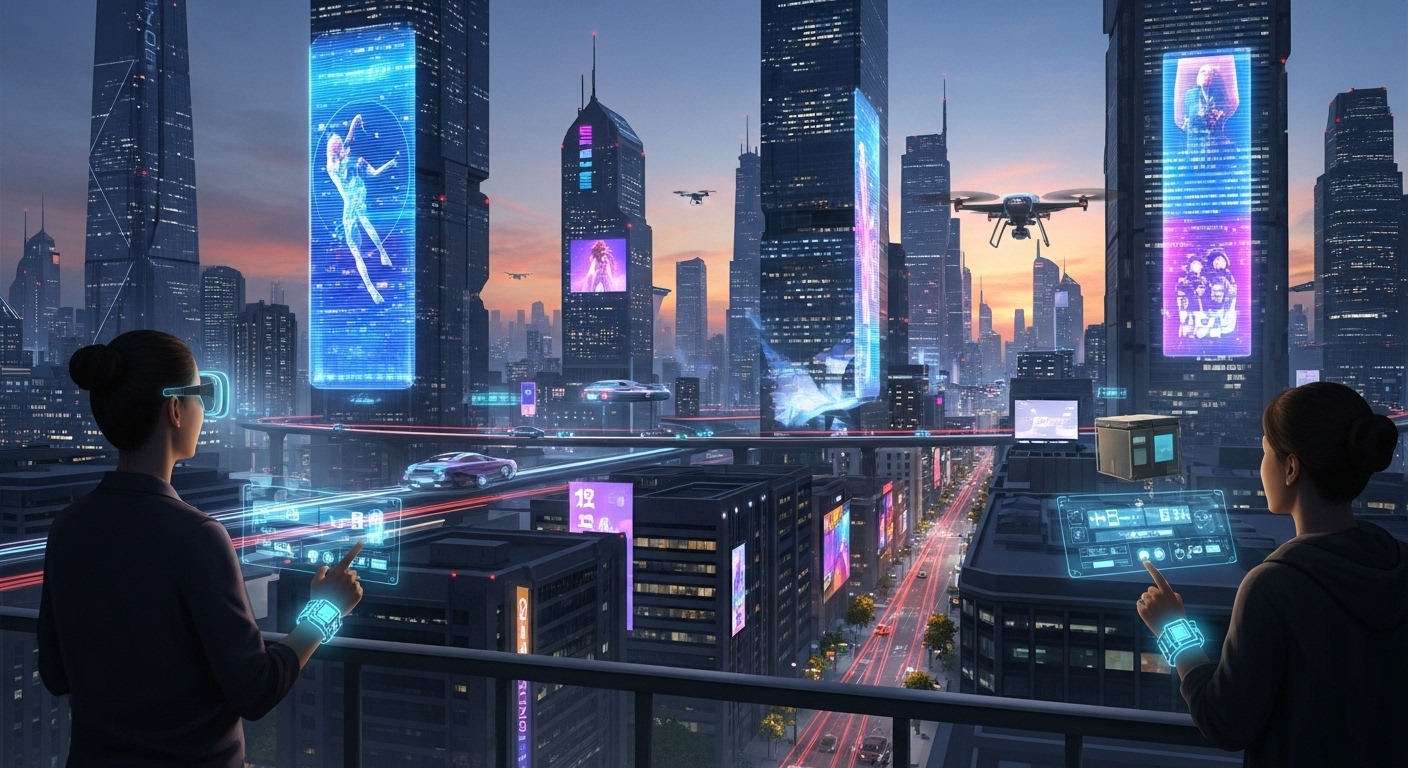
Introduction: Technology and Its Role in Shaping Our World
In the last few decades, technology has evolved at a breakneck pace, changing almost every aspect of human life. From the way we communicate to how we work, travel, and entertain ourselves, technological innovations are reshaping the very fabric of society. Today, it’s hard to imagine a world without smartphones, the internet, or artificial intelligence. Every new technological breakthrough seems to open up new possibilities, often in ways we never anticipated.
But technology isn’t just about gadgets and software; it’s about how these innovations improve our lives, solve problems, and create new opportunities. As we stand on the brink of even more revolutionary developments, such as artificial intelligence, quantum computing, and biotechnology, it’s clear that we’re entering an era where technology will drive the course of the future. In this post, we will explore how technology is shaping the world around us, the challenges it presents, and how we can embrace it to build a better tomorrow.
The Digital Transformation: How the Internet Changed Everything
The internet has arguably been the most influential technological advancement of the past century. What began as a military project in the 1960s and evolved into a tool for academic and scientific communication has now become the backbone of modern society. The internet has revolutionized how we interact with one another, access information, conduct business, and even form communities.
The rise of the internet has given birth to a digital economy, where companies like Amazon, Google, and Facebook dominate the global market. These companies have transformed industries, from retail to advertising, entertainment, and healthcare. With just a few clicks, we can shop, communicate, learn, and access an infinite amount of entertainment. The internet has also opened up new markets, providing entrepreneurs with opportunities to reach global audiences and scale their businesses in ways that were previously unimaginable.
Social media platforms have created new ways for people to connect, share, and communicate. Sites like Twitter, Instagram, and TikTok have not only changed how we interact with friends and family but have also become powerful tools for shaping public opinion, launching movements, and even influencing political discourse. The internet, in essence, has brought the world closer together, shrinking the global divide and making it easier to access information and collaborate on an unprecedented scale.
Yet, while the internet has brought many benefits, it also presents challenges. The spread of misinformation, online privacy concerns, and the increasing concentration of power in the hands of a few tech giants are pressing issues that need to be addressed. As we continue to innovate in the digital space, it’s crucial to consider the ethical implications of technology and work toward creating a more inclusive and equitable internet.
Artificial Intelligence: The Future of Smart Machines
Artificial intelligence (AI) is one of the most talked-about topics in the tech world today, and for good reason. AI refers to machines and systems that can perform tasks that typically require human intelligence, such as understanding language, recognizing patterns, and making decisions. While AI has been around for decades, recent advancements in machine learning, deep learning, and neural networks have led to unprecedented progress in the field.
AI is already making a significant impact across various industries. In healthcare, AI is being used to analyze medical data, identify patterns in patient records, and assist doctors in diagnosing diseases. Machine learning algorithms can scan X-rays, MRIs, and CT scans to detect early signs of conditions like cancer, helping doctors make faster, more accurate decisions. AI is also playing a key role in drug discovery, where algorithms analyze complex data to identify potential new treatments for diseases.
In the business world, AI-powered tools are streamlining operations, enhancing customer experiences, and driving innovation. Chatbots and virtual assistants are improving customer service, while AI-driven analytics help companies make better decisions based on data insights. In the automotive industry, self-driving cars are poised to transform transportation, potentially reducing accidents and traffic congestion while making travel more efficient.
However, AI also brings its own set of challenges. One of the most significant concerns is job displacement. As AI systems become more capable, there is a growing fear that many traditional jobs may become obsolete. Automation in sectors like manufacturing, logistics, and customer service could lead to job losses, creating a need for retraining programs and new job opportunities. Additionally, AI presents ethical questions about privacy, bias, and accountability. As AI systems are used to make critical decisions in areas like healthcare, law enforcement, and hiring, ensuring fairness and transparency becomes paramount.
The Internet of Things (IoT): A Connected World
The Internet of Things (IoT) refers to the network of physical devices that are connected to the internet and to each other. From smart thermostats and wearable fitness trackers to connected cars and industrial machines, the IoT is creating a world where everything is interconnected. This revolution is transforming how we interact with the physical world, offering new ways to manage our homes, work environments, and even our health.
Smart homes are one of the most popular applications of IoT technology. Devices like smart thermostats, voice-activated assistants, security cameras, and smart lighting systems allow homeowners to control their environment with ease. These devices can be controlled remotely via smartphones, providing convenience and energy savings. For example, a smart thermostat can learn your preferences and adjust the temperature in your home automatically, optimizing energy consumption without requiring manual input.
IoT is also having a profound impact on industries such as manufacturing, healthcare, and agriculture. In manufacturing, IoT-enabled sensors can track machine performance, predict maintenance needs, and improve operational efficiency. In healthcare, IoT devices like wearable heart monitors and smart insulin pumps provide real-time data to doctors, enabling personalized treatment plans. In agriculture, IoT technology helps farmers monitor soil conditions, control irrigation systems, and manage crops more efficiently, ultimately increasing productivity and sustainability.
While the IoT has the potential to make our lives easier and more efficient, it also raises concerns about security and privacy. As more devices become connected to the internet, the risk of cyberattacks increases. Hackers could potentially access personal data, control devices remotely, or even disrupt critical systems. As IoT technology continues to expand, ensuring robust security measures will be essential to protecting users’ privacy and safety.
Blockchain Technology: Redefining Trust
Blockchain technology, often associated with cryptocurrencies like Bitcoin, is quickly gaining recognition as one of the most disruptive innovations of the 21st century. At its core, blockchain is a decentralized, distributed ledger system that allows data to be stored across multiple computers in a way that is transparent, secure, and tamper-proof. Each “block” in the chain contains a record of transactions, and once added to the blockchain, these records cannot be altered.
Blockchain’s most well-known application is in the world of finance, where it underpins digital currencies like Bitcoin and Ethereum. Cryptocurrencies rely on blockchain’s decentralized nature to enable peer-to-peer transactions without the need for intermediaries like banks. This has the potential to reduce transaction fees, increase efficiency, and enable faster payments, especially across borders.
Beyond finance, blockchain has the potential to revolutionize many other industries. In supply chain management, blockchain can provide transparency and traceability, ensuring that products are authentic and ethically sourced. In the healthcare industry, blockchain can help secure patient data and enable seamless sharing of medical records between providers. In voting systems, blockchain could provide tamper-proof records of votes, reducing the risk of fraud and increasing trust in the electoral process.
Despite its potential, blockchain technology is still in its early stages, and several challenges remain. Issues such as scalability, energy consumption, and regulatory concerns need to be addressed before blockchain can achieve widespread adoption. However, as the technology matures, its potential to revolutionize industries and provide new solutions to existing problems is immense.
The Future of Technology: What Lies Ahead?
As we look to the future, technology will continue to advance at an exponential rate. The next frontier in tech includes developments in areas like quantum computing, 5G networks, and biotechnology. Quantum computing, which uses the principles of quantum mechanics to process information at unimaginable speeds, could unlock breakthroughs in fields such as cryptography, material science, and artificial intelligence. Meanwhile, the rollout of 5G networks promises faster, more reliable internet connections, which will be essential for supporting the growth of the IoT, autonomous vehicles, and other cutting-edge technologies.
Biotechnology is another area poised for transformation. Advances in gene editing technologies like CRISPR are enabling scientists to make precise changes to DNA, offering the potential to cure genetic diseases, improve agricultural productivity, and extend human lifespan. The merging of technology and biology will likely lead to breakthroughs in personalized medicine, organ regeneration, and human enhancement.
However, with these advances come new challenges and ethical questions. The rapid pace of technological innovation raises concerns about privacy, security, and inequality. As technology becomes more integrated into our lives, it is important to ensure that its benefits are shared equitably and that the risks are carefully managed.
Conclusion: Embracing the Future of Technology
Technology has already had a profound impact on the world, and its influence will only grow in the coming years. From artificial intelligence and blockchain to the Internet of Things and quantum computing, the possibilities are endless. As we continue to embrace these innovations, it is essential that we do so thoughtfully and responsibly.
Technology has the power to solve some of the world’s most pressing problems, from healthcare and education to climate change and economic inequality. But it also presents new challenges that must be addressed if we are to create a future that benefits everyone. By embracing innovation while keeping ethical considerations at the forefront, we can build a future where technology serves humanity in the most meaningful ways. The age of innovation is just beginning, and the future is brimming with opportunities.