
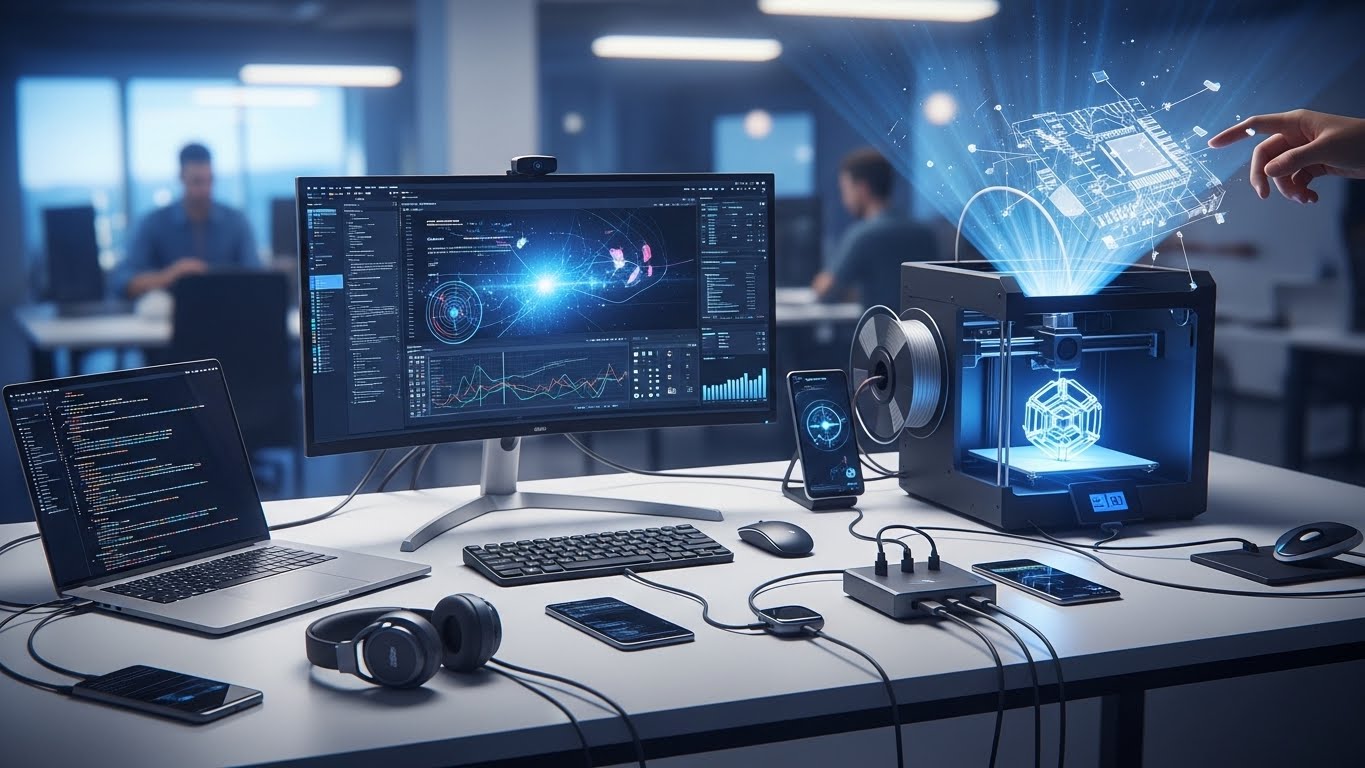
The world of technology is rapidly evolving, and with each passing year, the pace of innovation continues to accelerate. The digital landscape is constantly shifting, with new advancements and breakthroughs reshaping how we live, work, and interact. From artificial intelligence to quantum computing, the future of technology is poised to bring both challenges and opportunities. In this blog post, we’ll explore the most exciting trends and innovations that are shaping the future, offering insights into how these advancements will impact industries, businesses, and our daily lives.
The Rise of Artificial Intelligence: Revolutionizing Industries
Artificial Intelligence (AI) is undoubtedly one of the most transformative technologies of the 21st century. Over the past few years, AI has become increasingly integrated into various sectors, ranging from healthcare to finance, and even entertainment. Machine learning, a subset of AI, is enabling computers to learn from vast amounts of data, making predictions, and even automating complex tasks that were once exclusively human.
The impact of AI on industries is already profound. In healthcare, AI-powered diagnostic tools are helping doctors detect diseases earlier, leading to more effective treatments. In finance, AI is streamlining processes like fraud detection and risk management. The entertainment industry is also embracing AI, with algorithms now creating personalized content recommendations for viewers on platforms like Netflix and YouTube.
As AI continues to advance, we can expect even more significant changes. Autonomous vehicles are becoming a reality, with self-driving cars already being tested in various parts of the world. In the near future, AI may revolutionize how we work, with automated systems performing tasks that were once seen as uniquely human. This brings up both exciting possibilities and ethical questions, especially when it comes to the future of employment and privacy.
The Impact of 5G: A New Era of Connectivity
The rollout of 5G networks is one of the most anticipated technological advancements in recent years. With the promise of ultra-fast internet speeds and low latency, 5G is set to revolutionize industries that rely on real-time communication and data transfer. Whether it’s autonomous vehicles, remote healthcare, or augmented reality, 5G will enable new capabilities that were previously unimaginable.
The transition from 4G to 5G is more than just a speed upgrade. It’s about transforming the way we interact with technology. 5G will allow for seamless connectivity across a wide range of devices, creating an interconnected ecosystem of smart devices that can communicate with one another in real time. This will accelerate the growth of the Internet of Things (IoT), where everything from your refrigerator to your car will be connected to the internet, creating a smarter and more efficient world.
Beyond personal convenience, 5G has the potential to drive significant economic growth. The enhanced connectivity offered by 5G networks will enable businesses to innovate more quickly and scale up operations more efficiently. Additionally, industries such as manufacturing, agriculture, and logistics can leverage 5G to optimize processes and improve productivity.
Quantum Computing: Unlocking the Secrets of the Universe
Quantum computing is often hailed as the next frontier in computing power. Unlike classical computers that process data in binary form (0s and 1s), quantum computers use quantum bits (qubits), which can exist in multiple states simultaneously. This allows quantum computers to solve complex problems much faster than traditional computers, particularly in areas like cryptography, material science, and artificial intelligence.
While quantum computing is still in its early stages, its potential is enormous. For example, quantum computers could help us crack encryption methods that are currently unbreakable, leading to new possibilities in cybersecurity. In the field of medicine, quantum computing could enable researchers to simulate molecular structures more accurately, speeding up the discovery of new drugs and therapies.
Despite the immense potential of quantum computing, there are significant challenges to overcome before it becomes mainstream. Quantum systems are highly sensitive to external interference, which makes them difficult to control and stabilize. Researchers are actively working on overcoming these challenges, and it’s expected that we may see more practical quantum computing applications in the coming decades.
The Evolution of Virtual and Augmented Reality
Virtual reality (VR) and augmented reality (AR) are technologies that have been gaining traction in recent years, particularly in the gaming and entertainment industries. VR immerses users in entirely virtual environments, while AR overlays digital information onto the real world. Both of these technologies have applications far beyond entertainment, including in fields such as education, healthcare, and even remote work.
In education, for instance, VR can provide students with immersive experiences that enhance learning. Imagine a history class where students can explore ancient civilizations or a biology class where they can dissect virtual organisms. This level of interactivity and immersion can make learning more engaging and effective.
In healthcare, AR can assist surgeons by providing real-time information during surgeries, such as a patient’s vital signs or a 3D map of their organs. VR, on the other hand, is being used in therapy to treat conditions like PTSD, anxiety, and phobias by creating controlled environments for exposure therapy.
The rise of AR and VR also has the potential to transform remote work. With the advent of AR glasses and VR headsets, employees could collaborate in virtual workspaces, regardless of their physical location. This would not only improve communication but also foster a sense of presence and connection in remote teams.
Blockchain Technology: Beyond Cryptocurrency
Blockchain technology is best known for being the underlying technology behind cryptocurrencies like Bitcoin and Ethereum. However, its potential extends far beyond digital currencies. Blockchain is essentially a decentralized and secure ledger system that can be used to record transactions and store data in a way that is transparent, immutable, and tamper-proof.
The most significant application of blockchain is in the field of finance, where it can streamline and secure financial transactions. Blockchain eliminates the need for intermediaries, such as banks, in conducting transactions, which can lower costs and increase efficiency. Additionally, its transparency ensures that all parties involved can verify the integrity of the transaction.
Blockchain’s potential also extends to supply chain management. By using blockchain to track products from manufacturer to consumer, companies can ensure that goods are produced ethically, meet safety standards, and are delivered on time. This level of transparency is especially important in industries like food and pharmaceuticals, where the authenticity and safety of products are critical.
In the future, we may see blockchain being used for a variety of applications, including voting systems, intellectual property rights, and even digital identity management. As blockchain technology matures, it will undoubtedly become a crucial tool for securing and managing data in the digital age.
The Integration of Biotechnology and Technology
Biotechnology is another rapidly advancing field that is converging with technology in exciting ways. The integration of biotechnology and technology holds immense promise for improving human health and extending life expectancy. Advances in gene editing, such as CRISPR, are making it possible to modify DNA with unprecedented precision, potentially eliminating genetic diseases and enhancing human traits.
Additionally, wearable health devices are becoming increasingly sophisticated, enabling individuals to monitor their health in real time. From smartwatches that track heart rate to patches that monitor glucose levels, these devices are providing valuable insights into personal health and wellness. As this technology continues to evolve, we can expect even more breakthroughs in personalized medicine, where treatments are tailored to an individual’s genetic makeup and lifestyle.
The merging of biotechnology and technology also opens up possibilities for advancements in longevity. Scientists are studying ways to slow down the aging process and extend the human lifespan, with some researchers even exploring the potential of nanotechnology to repair damaged cells and tissues at a molecular level.
Conclusion: Embracing the Future with Caution and Optimism
The future of technology is both thrilling and uncertain. While we can look forward to incredible advancements in AI, quantum computing, blockchain, and biotechnology, we must also be mindful of the ethical and societal challenges these technologies present. The rapid pace of innovation raises questions about privacy, job displacement, and the responsible use of powerful tools.
As we navigate the digital landscape of tomorrow, it’s essential to strike a balance between embracing new technologies and considering their broader implications. The future of technology holds immense promise, but only by addressing its challenges head-on can we ensure that it serves the greater good and creates a better world for future generations.
The journey into this new digital age will require collaboration, innovation, and thoughtful decision-making. As we look ahead, one thing is certain: technology will continue to shape our lives in ways we can’t yet fully comprehend, but it will be up to us to steer its development in a direction that benefits all of humanity.