Introduction
In the 21st century, technology has become the beating heart of human progress. Every second, a new idea, invention, or innovation transforms how we live, work, and communicate. The world once dependent on physical labor, manual writing, and face-to-face interactions is now governed by algorithms, artificial intelligence, and global connectivity. This digital revolution has not only enhanced convenience but has also redefined creativity, productivity, and even human relationships. The fusion of human intelligence with digital systems has created what many experts call the “Digital Renaissance”—a new era where technology empowers imagination, innovation, and inclusion.
The Evolution of Technology: From Machines to Intelligence
The journey of technology began with simple machines designed to make human work easier. The invention of the wheel marked the first step toward automation, while the Industrial Revolution introduced machinery that revolutionized production. However, the most profound shift came with the Information Age in the late 20th century. Computers, once the size of rooms, became accessible devices capable of performing complex tasks within seconds.
Today, we have moved far beyond mechanical automation. Technology now possesses intelligence. Artificial Intelligence (AI) systems can think, analyze, and make decisions. Machine Learning allows computers to learn from experience without explicit programming. This evolution from simple tools to intelligent companions marks the most transformative phase of human history.
Artificial Intelligence: The Brain Behind the Digital Age
AI has become the driving force behind modern innovation. It powers everything from smartphone assistants to self-driving cars. In industries such as healthcare, AI algorithms assist doctors in diagnosing diseases faster and with greater accuracy. In finance, intelligent systems predict market trends and manage risk with precision. Even in entertainment, AI personalizes user experiences, recommending movies, music, or news based on preferences.
However, the power of AI extends beyond convenience. It is reshaping education, agriculture, and governance. Intelligent tutoring systems help students learn at their own pace, while smart agriculture technologies monitor soil and weather to optimize crop yield. Governments are also using AI to analyze data for better policy decisions, ensuring efficiency and transparency.
The Internet of Things: A World of Connected Intelligence
Another transformative technology reshaping the modern era is the Internet of Things (IoT). It connects devices, appliances, and infrastructure to the internet, creating a web of intelligent objects that communicate with each other. Imagine waking up in a smart home where your alarm clock tells the coffee maker to start brewing, and your car adjusts its route based on traffic updates.
In industries, IoT enables smart factories that can monitor and adjust production automatically. In cities, it powers smart infrastructure that optimizes energy usage, waste management, and traffic flow. The result is a world that operates with unprecedented efficiency and intelligence, where data flows seamlessly between machines and humans to enhance daily life.
The Rise of 5G: Powering the Next Generation of Connectivity
The expansion of 5G networks has taken connectivity to the next level. With lightning-fast internet speeds and minimal latency, 5G supports real-time communication between billions of devices. This advancement is crucial for technologies like autonomous vehicles, virtual reality, and telemedicine.
For instance, in healthcare, 5G enables remote surgeries, where doctors can perform procedures using robotic instruments guided over ultra-fast networks. In entertainment, it enhances gaming and streaming experiences with high-resolution graphics and zero lag. Moreover, it empowers businesses to operate seamlessly across global digital ecosystems. The rise of 5G is not merely an upgrade—it is the foundation of a hyperconnected world.
Blockchain and the Future of Digital Trust
In an era where data is the new currency, ensuring trust and transparency has become essential. Blockchain technology has emerged as the ultimate solution for secure digital transactions. Unlike traditional databases, blockchain operates on a decentralized ledger, making data tamper-proof and transparent.
Beyond cryptocurrency, blockchain has applications in supply chain management, healthcare, and even voting systems. For example, it allows consumers to trace the origin of products, ensuring authenticity and ethical sourcing. In healthcare, it secures patient records, granting access only to authorized professionals. By enabling transparency and reducing fraud, blockchain is redefining how trust functions in the digital age.
The Role of Robotics in a Smarter Future
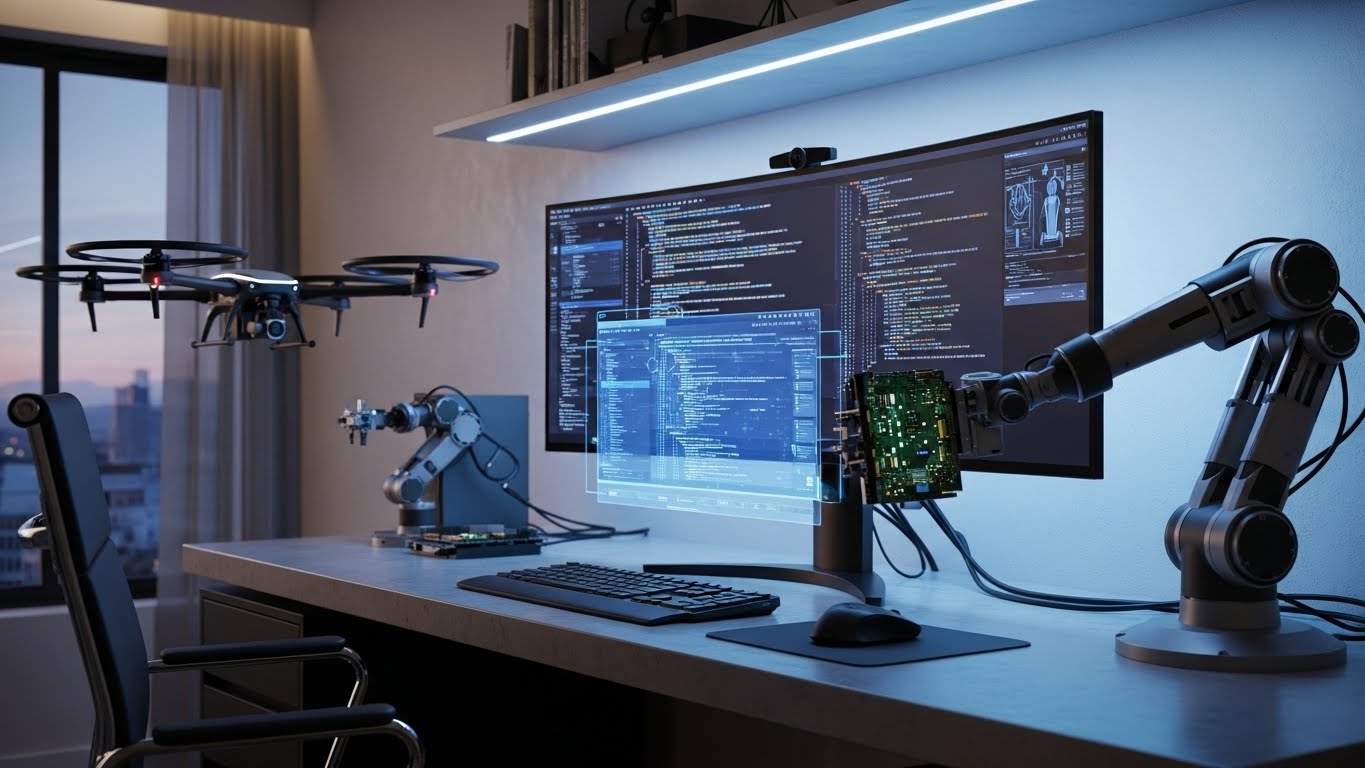
Robotics has evolved from industrial machinery into intelligent companions capable of learning, adapting, and interacting with humans. Robots are no longer confined to factory floors; they are assisting in hospitals, delivering packages, and even exploring outer space.
In healthcare, robotic systems assist surgeons with delicate operations, improving precision and reducing recovery times. In logistics, autonomous robots streamline warehouse management and delivery. Meanwhile, humanoid robots are being designed to provide emotional support, assist the elderly, and perform household tasks. Robotics, when combined with AI, has the potential to bridge the gap between human intelligence and machine efficiency.
Virtual Reality and Augmented Reality: Redefining Human Experience
The line between the digital and physical world is blurring, thanks to Virtual Reality (VR) and Augmented Reality (AR). VR creates immersive digital environments for gaming, training, and education, while AR overlays digital information onto the real world through devices like smartphones or smart glasses.
In education, VR allows students to explore historical events or scientific phenomena in an interactive way. In architecture, AR enables designers to visualize buildings before they are constructed. Even in healthcare, these technologies help in simulating surgeries for training or treating phobias through controlled exposure. By merging imagination with reality, VR and AR are transforming how humans perceive and interact with information.
Cybersecurity: Protecting the Digital Frontier
As technology evolves, so do cyber threats. The more connected our world becomes, the more vulnerable it is to hacking, data breaches, and digital espionage. Cybersecurity has therefore become a cornerstone of modern technology.
Advanced encryption, biometric authentication, and AI-driven security systems are essential tools to protect data and privacy. Organizations are investing heavily in cyber defense mechanisms to safeguard their digital assets. Individuals, too, must understand the importance of digital hygiene—using strong passwords, updating software, and being cautious about data sharing. In the digital era, cybersecurity is not just a technical requirement; it is a collective responsibility.
Green Technology: Innovation for a Sustainable Future
As the planet faces environmental challenges, technology has become a key ally in sustainability. Green technology focuses on reducing carbon emissions, conserving energy, and promoting renewable sources. From solar panels and wind turbines to electric vehicles and smart grids, these innovations aim to protect the planet while advancing human development.
Digital systems also play a crucial role in monitoring environmental changes, predicting natural disasters, and managing resources efficiently. Artificial intelligence and IoT enable smart agriculture and energy optimization, ensuring that progress does not come at the expense of the environment.
The Human Side of Technology: Balancing Innovation with Ethics
While technology promises progress, it also raises ethical concerns. Issues such as data privacy, job automation, and digital addiction highlight the need for responsible innovation. The goal should not be to replace humans but to empower them. Ethical AI, transparent algorithms, and digital literacy are essential to ensure that technology remains a tool for good rather than a source of division.
Moreover, the digital divide—unequal access to technology—remains a challenge. Bridging this gap requires collaboration between governments, industries, and communities to ensure that every individual benefits from the digital age.
The Future of Technology: A Vision of Infinite Possibilities
Looking ahead, technology will continue to evolve at an unimaginable pace. Quantum computing promises to solve problems beyond the reach of classical computers. Biotechnology and nanotechnology will revolutionize medicine, while space exploration will open new frontiers for human settlement. The convergence of AI, robotics, and neuroscience may even lead to the creation of artificial consciousness—machines capable of understanding emotions and creativity.
However, the true power of technology lies not in the machines themselves but in how humanity chooses to use them. The Digital Renaissance offers an opportunity to redefine progress, not merely as technological advancement but as a means to create a more intelligent, inclusive, and sustainable world.
Conclusion
Technology has become the most powerful force shaping the modern world. It influences how we think, communicate, and innovate. From artificial intelligence to sustainable energy, each breakthrough brings us closer to a future defined by intelligence, creativity, and responsibility. Yet, as we continue to advance, it is essential to remember that technology is only as powerful as the values guiding its use. The Digital Renaissance is not about machines taking over humanity—it is about humanity evolving through technology.
This era invites us to imagine a world where innovation serves compassion, where intelligence complements creativity, and where progress harmonizes with purpose. The digital future is here, and it is ours to shape—wisely, responsibly, and collectively.